
About the Institute for Evolvable Medicines
The Institute for Evolvable Medicines is a nonprofit research institute developing therapies designed to stay ahead of rapidly evolving diseases such as viruses and cancer.
Why Evolvable Medicine
Many diseases evolve faster than the medicines designed to treat them. Viruses mutate, cancers adapt, and drug resistance emerges again and again.
The Institute for Evolvable Medicines focuses on therapies designed to adapt alongside the diseases they target.
Leadership
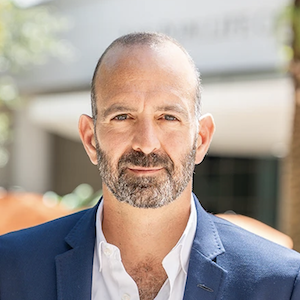
Leor S. Weinberger, PhD
Leor Weinberger is Founder and President of the Institute for Evolvable Medicines and a leading scientist in virology, systems biology, and therapeutic development. He has held senior academic positions at the University of California, San Francisco, the Gladstone Institutes, and the University of Miami Miller School of Medicine, where he serves as Professor and Chair of Cell and Systems Biology.
Dr. Weinberger’s research focuses on developing therapies that can outpace the evolution of viruses and cancer. He pioneered the concept of Therapeutic Interfering Particles (TIPs), a new class of antivirals designed to resist the emergence of drug resistance and enable single-administration treatments. His work has advanced from fundamental discoveries in viral gene regulation and stochastic “noise” in biology to IND-enabled clinical programs for HIV and SARS-CoV-2.
A recipient of the NIH Director’s Pioneer Award, NIH Director’s Transformative Research Award, and NIDA Avant-Garde Award for HIV Research, Dr. Weinberger’s work bridges basic science and translational medicine, with multiple programs advancing toward clinical trials.

Galyn Susman
Galyn Susman is Co-founder and Chief Operating Officer of the Institute for Evolvable Medicines, where she leads strategy, operations, and translational program execution. She brings decades of experience managing large-scale, high-stakes technical and creative organizations to the development of next-generation therapeutics.
Prior to co-founding IEM, Susman spent over 30 years at Pixar Animation Studios, where she held senior production leadership roles and managed teams of more than 300 scientists, technologists, and artists, overseeing budgets exceeding $200 million. She served as a producer of Toy Story 4, which received the Academy Award for Best Animated Feature, and as associate producer of Ratatouille, also an Academy Award winner.
At IEM, Susman manages multi-year, multi-institutional research programs supported by the U.S. Department of Defense, guiding projects from IND-enabling studies and GMP manufacturing through regulatory submission and first-in-human clinical trials. She specializes in integrating scientific, regulatory, and operational workflows to advance complex translational programs.
Board of Directors

David J. Bacon, PhD
David J. Bacon is a Captain in the U.S. Navy Medical Service Corps and a senior biomedical research leader with more than 25 years of experience in infectious disease and military health. He currently serves as Director of the Military Population Health Directorate at the Naval Health Research Center, where he leads a multidisciplinary research organization managing a $27 million portfolio across more than 150 projects.
Dr. Bacon has directed and advised large-scale Department of Defense research programs spanning multiple continents, including oversight of more than $2 billion in infectious disease research funding. His work has advanced global efforts in malaria, emerging infectious diseases, and pandemic response, including evaluation of therapeutics, diagnostics, and monitoring technologies during COVID-19.

Nancy L Haigwood, PhD
Nancy L. Haigwood is a Professor of Pathobiology and Immunology at Oregon Health & Science University, where she is a Core Scientist and former director of the Oregon National Primate Research Center. She earned her PhD in microbiology and immunology from the University of North Carolina at Chapel Hill and completed postdoctoral training in virology at the Johns Hopkins University School of Medicine. Her research over more than four decades has focused on viral vaccines and antibody-based therapies, particularly using nonhuman primate models for HIV and other viral diseases. She has authored over 140 scientific publications, served on numerous NIH committees and nonprofit boards, and was elected to the American Academy of Microbiology. Dr. Haigwood is also an advocate for public engagement in science, including vaccine education and transparency in animal research.
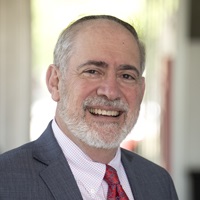
Brian R. Kaye, M.D., F.A.C.P., F.A.C.R.
Dr. Brian R. Kaye is a Clinical Professor of Medicine at the University of California,
San Francisco, and an Adjunct Professor in the College of Education and Health Sciences at Touro University, Vallejo. A retired rheumatologist, he practiced for 36 years in Berkeley and Orinda, California. Dr. Kaye graduated summa cum laude from Princeton University and earned his M.D. from Baylor College of Medicine. He completed his postgraduate training in Internal Medicine and Rheumatology at Santa Clara Valley
Medical Center in San Jose and at Stanford University Medical Center. Dr. Kaye has published twenty-five articles, abstracts, and book chapters, and has served as a manuscript reviewer for several peer-reviewed medical journals. He has also held leadership roles on six non-profit boards, including chairing three of them.

Wendy Sammons-Jackson, PhD
Wendy Sammons-Jackson is a retired U.S. Army Colonel and biodefense microbiologist with more than two decades of experience in infectious diseases, clinical laboratory sciences, and medical countermeasure development. She previously served as Acting Deputy Principal Assistant for Research and Technology at the U.S. Army Medical Research and Development Command, advising on strategy and oversight of a $2 billion research portfolio. She later served as Director and Science Advisor at Advanced Technology International, providing technical oversight for COVID-19–related research programs. Dr. Sammons-Jackson has led major Department of Defense infectious disease initiatives and brings deep expertise in translational research, program execution, and national biodefense strategy.
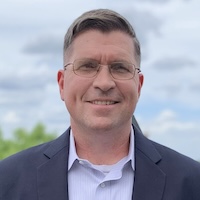
Stuart Tyner, PhD
Colonel (Ret.) Dr. Stuart Tyner has more than 25 years of US government experience leading interdisciplinary teams in medical solution development, with extensive expertise in trauma and regenerative medicine and comprehensive wound management and infection. Dr. Tyner led research and development efforts from discovery through human clinical testing. While in the military, he led a $750M USG portfolio of infectious disease research to develop FDA-approved drugs, biologics, vaccines, and diagnostics. He led the Department of Defense’s $260M investment in COVID medical countermeasures, developed the DoD’s 100-day vaccine strategy, and served as a trusted advisor to senior DoD leadership. Dr. Tyner has substantial international experience working with partners across Asia, Europe, South America, and Africa, from biodefense preparedness to regulated clinical trials, and is known for delivering strategic impact across multidisciplinary programs.